Your Payer Contract Is More Than a Fee Schedule. Negotiate It That Way.
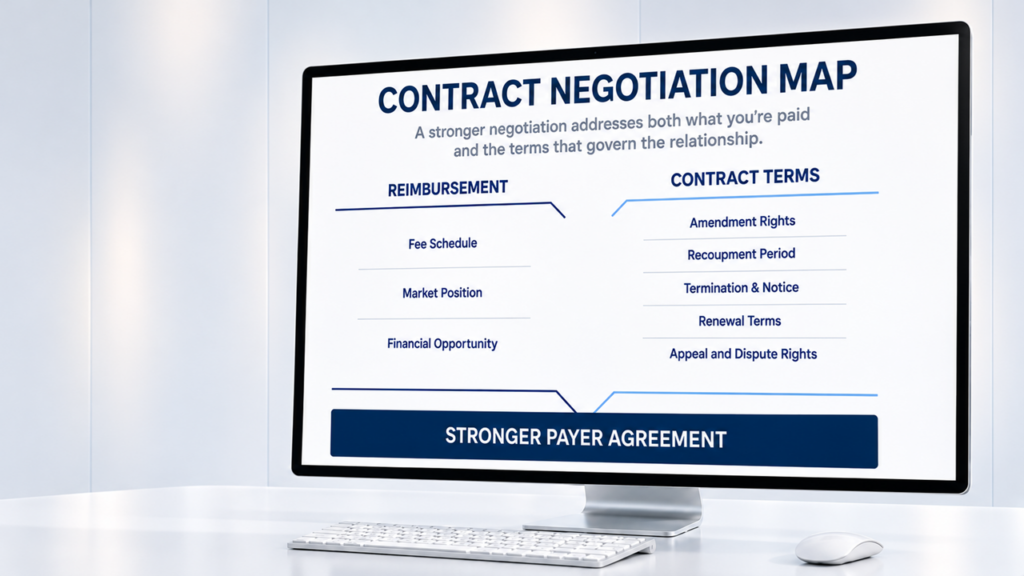
A stronger fee schedule does not automatically create a stronger agreement. Effective negotiations address reimbursement alongside amendment rights, payment disputes, recoupments, policy changes, termination provisions, and the other terms governing the payer relationship.
When practices think about payer negotiation, reimbursement usually receives most of the attention. That is understandable. A stronger fee schedule can create an immediate and measurable financial benefit.
But a payer contract determines far more than what the practice should be paid. It establishes many of the rules governing how claims are submitted, how payment disputes are handled, how policies may be changed, how long the payer can pursue recoupments, and how either party may end the relationship.
A better fee schedule matters. So does everything surrounding it. Strong payer negotiations evaluate both.
Better Rates Can Still Exist Inside a Poor Contract
A practice may successfully negotiate meaningful reimbursement increases while leaving the underlying agreement largely unchanged. The contract may still allow broad policy modifications, automatically renew through an evergreen provision, provide an extended recoupment period, or impose notice requirements that restrict the practice’s flexibility.
The practice improved its rates, but it did not necessarily improve the entire business arrangement. That distinction matters because the fee schedule and the agreement perform different functions.
The fee schedule identifies contracted reimbursement amounts. The agreement and the policies it incorporates help determine how those rates may be changed, applied, disputed, audited, or recovered. A strong rate can lose value when the surrounding terms create avoidable financial or administrative exposure.
Start With What the Agreement Actually Says
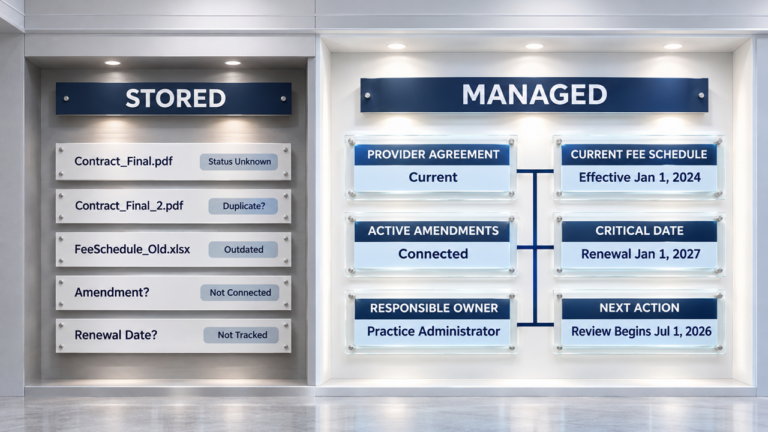
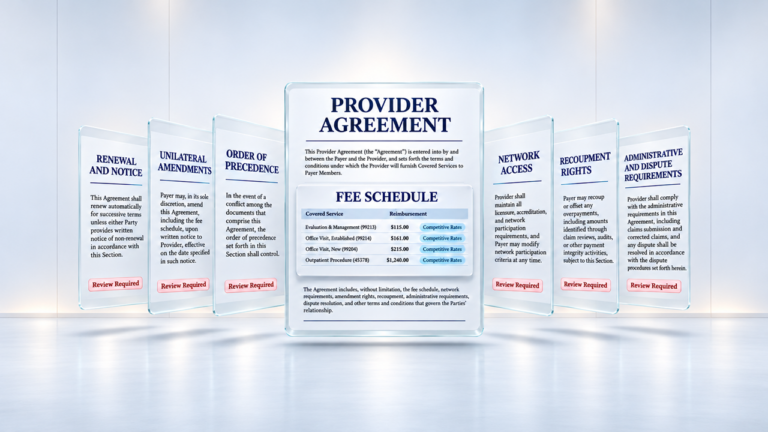
Before deciding what to negotiate, practices should understand the existing agreement. Review the complete contract, amendments, exhibits, fee schedules, and any payer manuals or policies incorporated by reference.
The provisions deserving attention will vary, but commonly consequential terms include:
- Amendment provisions and the notice required before changes become effective
- Evergreen renewals, contract anniversaries, and termination requirements
- Audit rights, retroactive recoupments, and lookback periods
- Timely filing requirements and appeal or dispute deadlines
- Medical necessity, payment-policy, and claims-editing provisions
- Fee schedule modification language and references to external payer manuals
Not every term will warrant a requested revision, and not every payer will agree to modify every provision. The objective is to know which terms matter before the negotiation begins.
Turn Contract Review Into Negotiation Strategy
Contract language becomes useful when it is connected to the practice’s actual experience. If the agreement permits changes with limited notice, determine how amendments are delivered, when they become effective, and what options the practice has if it disagrees.
If the payer has pursued substantial retroactive recoveries, review the applicable audit and recoupment language. If appeals have been lost because of short deadlines or unclear submission requirements, examine the dispute provisions. If termination notice is due well before the anniversary date, that requirement should influence the negotiation calendar.
These are not abstract legal concerns. They can affect cash flow, staff workload, dispute rights, and the practice’s ability to respond when the payer changes its policies.
Use the Practice’s Experience as Evidence
Useful negotiation data includes more than reimbursement benchmarks. The practice’s history with the payer is evidence too.
- Recurring medical-necessity denials or payment-policy disputes
- Retroactive recoupments that created material financial disruption
- Policy changes that altered reimbursement or documentation requirements
- Appeal deadlines or submission rules that caused operational difficulty
- Amendments delivered without adequate time for meaningful review
Document the frequency, financial effect, administrative burden, and specific contract language involved. Instead of saying the practice dislikes a provision, explain how the provision has affected operations and identify the change the practice wants the payer to consider.
That approach turns a general objection into a defined business issue.
Prioritize the Terms That Matter Most
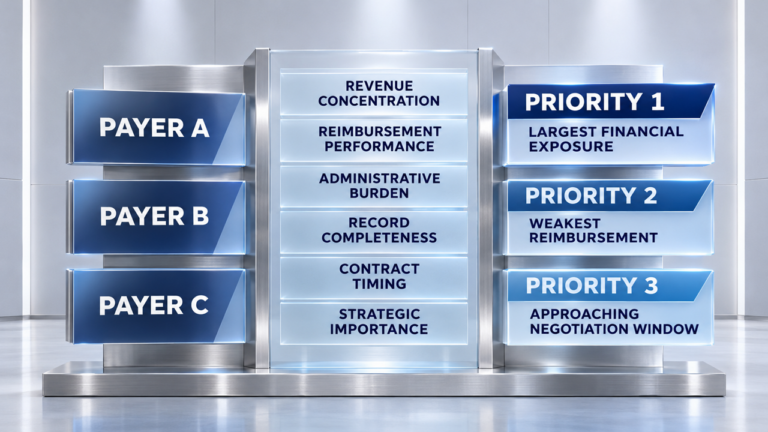
A practice should not present twenty requested revisions simply because twenty provisions could theoretically be improved. Prioritize the few terms that create the greatest financial exposure, recurring administrative burden, or strategic limitation.
Two practices negotiating with the same payer may reasonably identify different priorities. One may focus on recoupment and appeal rights. Another may need clearer amendment notice, stronger fee schedule protections, or greater flexibility around termination.
The purpose is not to create a wish list. It is to develop a focused request grounded in how the payer relationship actually affects the practice. When a proposed change involves significant contractual rights or obligations, the practice may also want qualified legal counsel to review the language.
Reimbursement and Contract Language Work Together
A fee schedule does not operate in isolation. The contract establishes the framework within which reimbursement occurs.
A strong rate matters, but so does the language governing how that rate may be modified. A reimbursement increase matters, but so do the provisions governing audits, recoupments, appeals, and payment policies. A multiyear term may offer stability, but its value depends partly on what the payer is permitted to change during those years.
The rates tell the practice what it should be paid. The agreement helps establish the rules under which it gets paid. Both deserve attention.
Know What the Final Documents Include
Not every request will be accepted. Some payer provisions are standardized, some require additional internal approval, and others may be open to revision. A declined request does not make the process unsuccessful.
The practice still gains valuable information by documenting what it requested, what the payer accepted, what it declined, and what remains in the final agreement. That record creates institutional knowledge for implementation and the next negotiation.
When the payer presents an amendment or revised agreement, verify the rates, effective dates, changed provisions, and any new language introduced during the process. Do not assume the final documents reflect every point discussed. Significant changes should be reviewed carefully before signature.
Your Next Step
Choose one of your largest commercial payer agreements and review it without beginning with the fee schedule. Identify three provisions with the greatest financial, administrative, or strategic significance to the practice.
Then ask whether the practice would accept those exact terms if it were negotiating the agreement today. If the answer is no, document why, connect the concern to the practice’s experience, and define the change worth discussing.
Building Stronger Payer Strategies
Strong payer negotiations address the issues that matter most to the practice. Sometimes the priority is reimbursement. Sometimes it is contract language. Often, it is both.
At CodeToolz, we help practices manage payer agreements and critical dates, analyze reimbursement and contract performance, and prepare focused negotiation strategies. That complete view helps physicians understand not only what they are paid, but also the contractual rules influencing how that payment is determined and protected.
Manage. Analyze. Negotiate. Then verify that the final agreement reflects what the practice worked to achieve.
Dana R. Bellefountaine Jr. | Founder & CEO | CodeToolz | The Physician’s Advocate in Payer Contracting
#CodeToolz #PayerContracting #PayerContracts #ContractManagement #ContractNegotiation #FeeSchedules #PhysicianReimbursement #RevenueIntegrity #MedicalPracticeManagement