Payer Contract Renegotiation Is a Sequence, Not a Sprint
Opening every payer negotiation simultaneously can dilute preparation and follow-through. A deliberate sequence helps practices rank opportunities, build stronger evidence, evaluate proposals carefully, confirm implementation, and apply each lesson to the next payer.

When several payer contracts contain outdated rates or unfavorable terms, opening every renegotiation at once can feel decisive. The practice sends multiple requests, creates visible activity, and begins pursuing every available opportunity.
But initiating a negotiation is the easy part. Each payer relationship requires preparation, analysis, follow-up, proposal review, and implementation monitoring. When too many begin without a deliberate sequence, deadlines compete and the practice may lose the time needed to evaluate each proposal carefully.
A strong payer strategy is not measured by the number of negotiations in progress. It is measured by whether the practice can pursue each opportunity effectively and carry what it learns into the next one.
Sequence Protects Negotiating Leverage
A deliberate sequence does not mean a practice must negotiate with only one payer at a time. A well-resourced organization may manage several negotiations successfully. The principle is that each negotiation should begin because the opportunity, timing, evidence, and available capacity support it, not simply because another letter can be sent.
Sequencing also allows one payer’s questions, objections, and proposal structure to strengthen the next request. The practice can refine its benchmarks, clarify its value, improve its documentation, and anticipate the provisions that deserve closer attention.
1. Confirm the Contractual Foundation
Before contacting a payer, the practice should know what currently governs the relationship. That includes the executed agreement, active amendments and attachments, current fee schedule, reimbursement methodology, renewal and termination provisions, notice requirements, and relevant payer contacts.
Timing deserves particular attention. A practice may request reconsideration at any time, but contract anniversaries, notice periods, amendment provisions, and termination windows can materially affect leverage and available options. Missing documents or dates makes it harder to define the request and evaluate the payer’s response.
The foundation also protects the practice from focusing only on the percentage increase. A proposal may improve selected rates while extending the term, changing the governing fee schedule, expanding unilateral amendment rights, adding administrative requirements, or delaying implementation.
2. Analyze and Rank the Opportunities
Not every payer presents the same opportunity. The largest payer by patient volume may not have the greatest reimbursement gap. The lowest-paying payer may represent limited utilization. A contract with reasonable rates may create significant denials, underpayments, or administrative burden.
A disciplined review should consider:
- Patient and service volume, including high-volume CPT® codes.
- Current contracted rates, actual allowed amounts, and payment consistency.
- Medicare and relevant commercial or market benchmarks.
- Denials, underpayments, recoupments, and administrative burden.
- Contract age, time since the last meaningful adjustment, and upcoming notice dates.
- Estimated annual financial impact and the reliability of the supporting evidence.
The objective is not merely to identify the lowest rate. It is to find the strongest combination of financial impact, contractual readiness, timing, and negotiating opportunity.
3. Define the Request and Supporting Evidence
A negotiation should begin with a defined objective. The practice may seek targeted CPT® rate adjustments, a broader fee schedule change, revised contract language, relief from a recurring administrative problem, or a combination of improvements.
The supporting evidence should match the request. Utilization-weighted reimbursement analysis may support selected rate changes. Payment history may demonstrate underpayment or denial patterns. Market data may provide context when the comparison is sufficiently relevant. Patient access, specialty availability, geographic coverage, service capacity, and quality may help explain the practice’s value to the network.
4. Initiate and Track Payer Engagement
Sending the renegotiation notice begins the process. It does not manage it. The practice should preserve the submission date, recipient, confirmation, payer response, requested documentation, next action, responsible person, and follow-up deadline.
Payers rarely move in a straight line. One may respond promptly but take months to issue a proposal. Another may request more data. A third may deny the request before reconsidering it through escalation. Consistent tracking prevents silence or delay from becoming the end of the negotiation.
5. Evaluate the Complete Proposal
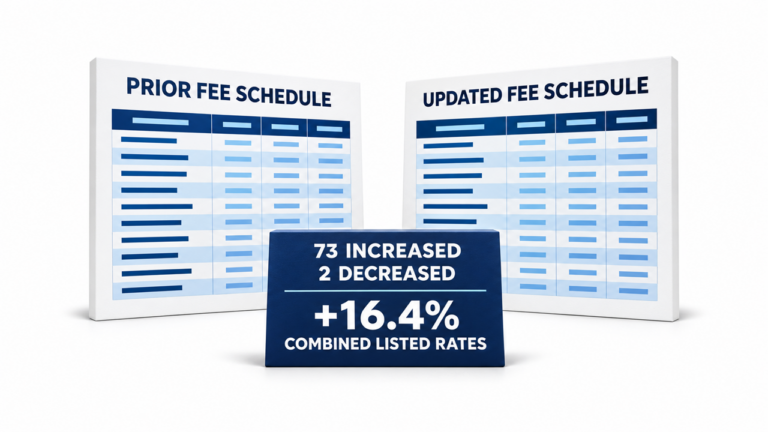
When a payer responds, the practice should measure the offer rather than rely on the payer’s stated percentage. Proposed rates should be compared with the current schedule and weighted by actual utilization to determine the likely financial effect.
The review should also include effective dates, term length, reimbursement methodology, amendment rights, administrative provisions, and implementation requirements. A favorable headline increase can lose value if it applies narrowly, begins late, or is paired with unfavorable contract changes.
6. Confirm Implementation and Payment Performance
An accepted proposal is not complete until the new terms are implemented correctly. The practice should preserve the signed amendment or agreement, confirm the effective date, obtain the final fee schedule, update expected reimbursement, and test paid claims after implementation.
This confirms that the negotiated result became an operational result and creates a reliable record for the next review cycle.
7. Apply What Was Learned to the Next Payer
After each negotiation, the practice should identify what strengthened the request, where the payer resisted, which evidence proved useful, and what follow-up required the most effort. That information should shape the next payer selection and improve the next negotiation package.
When Multiple Negotiations Make Sense
Several negotiations may need to proceed together after a merger, provider expansion, market change, or overlapping contract cycles. Multiple negotiations can also be appropriate when responsibilities are assigned and the organization has sufficient capacity.
Each payer should still have a defined objective, supporting analysis, communication history, next action, and response deadline. Simultaneous activity should be intentional and manageable, not the result of sending every request at once and hoping the process remains organized.
Where CodeToolz Fits
At CodeToolz, the Payer Contract Center maintains the agreements, fee schedules, amendments, effective dates, communications, and negotiation status that establish the contractual record. The Contract Analyzer compares reimbursement, applies CPT®-level utilization, identifies financial opportunities, and evaluates payer proposals against the practice’s current position.
Together, those functions support the full sequence: manage the portfolio, rank the opportunities, prepare the negotiation, track payer engagement, evaluate the response, and preserve the outcome. The objective is to help practices pursue the right opportunities with the information and process required to manage them well.
Your Next Step
List the practice’s commercial payer contracts and answer four questions for each one: Is the contractual record complete? What timing or notice provisions matter? What is the estimated financial opportunity? Is the practice prepared to support and manage the negotiation?
Use the answers to select the first payer or the first manageable wave. Then decide what must occur before the next negotiation begins. The sequence should reflect evidence, timing, and capacity rather than urgency alone.
Building Stronger Payer Strategies
Renegotiating every payer contract simultaneously may create activity, but it does not necessarily create progress. Strong payer negotiations require organized contracts, meaningful analysis, defined priorities, consistent follow-up, careful proposal evaluation, and implementation monitoring.
The goal is to approach the right payer, at the right time, with the right evidence, and then carry that discipline forward. Payer contract renegotiation is a sequence, not a sprint.
Dana R. Bellefountaine Jr. | Founder & CEO | CodeToolz | The Physician’s Advocate in Payer Contracting
#CodeToolz #PayerContracts #ContractNegotiation #PayerNegotiations #ContractManagement #ContractAnalysis #PhysicianReimbursement #FeeSchedules #MedicalPracticeManagement #RevenueStrategy