Your Next Negotiation Shouldn’t Start With Reimbursement. It Should Start With Preventing Denials.
Higher rates provide limited value when preventable denials block payment. Practices should use denial patterns to negotiate clearer authorization, documentation, adjudication, appeal, and contract-language requirements alongside reimbursement improvements.
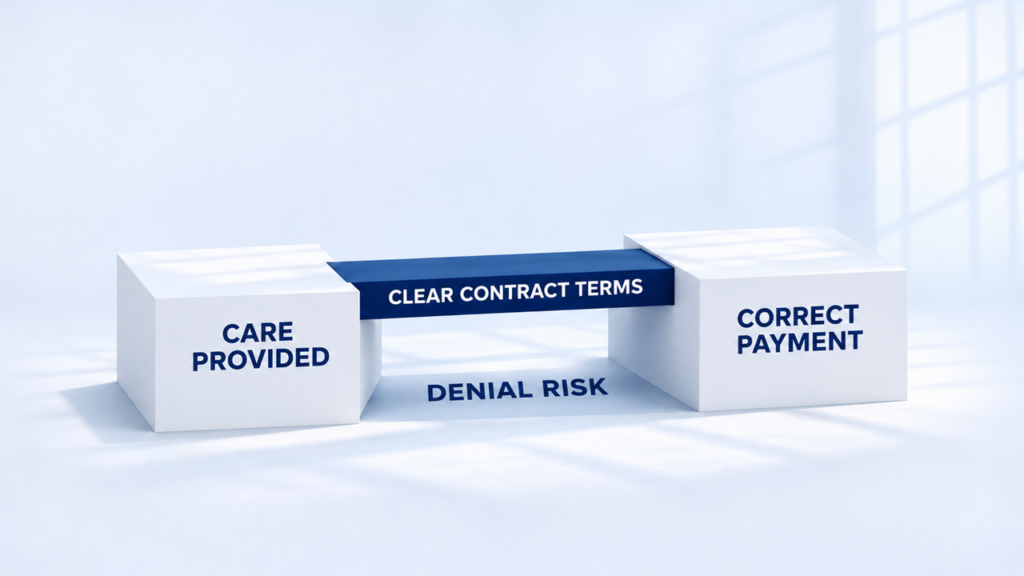
Fair reimbursement belongs in every payer negotiation. Physicians should be paid appropriately for the care they provide. But a higher contractual rate has limited value when documentation ambiguity, authorization requirements, claims edits, or appeal barriers prevent the practice from consistently collecting it.
That is why the next negotiation should not begin with a percentage increase alone. It should begin by identifying what is causing preventable denials and asking what contract language could reduce them.
The strongest agreements do more than establish how much a service is worth. They create clearer expectations for how the service will be authorized, documented, adjudicated, and paid.
A Better Rate Is Not the Same as Better Payment
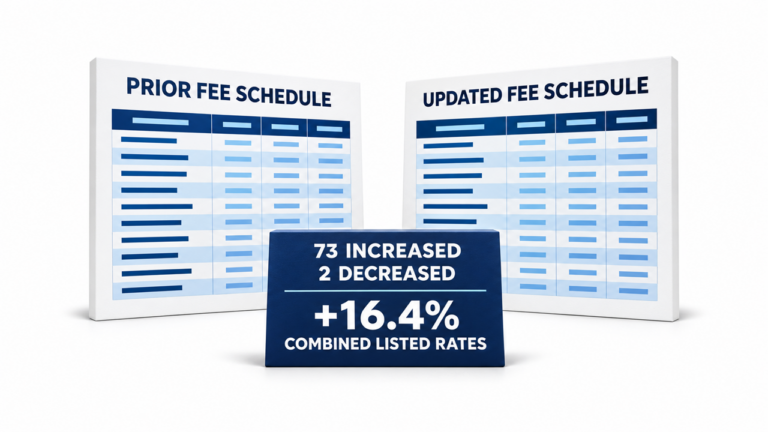
Practices often measure negotiation success by the increase in the fee schedule. That measure matters, but it is incomplete. A rate can improve while net collections remain constrained by denials, payment delays, recoupments, and the administrative cost of repeated appeals.
A successful negotiation should address both the stated reimbursement and the practice’s ability to receive it. That requires looking beyond the fee schedule to the operational rules surrounding payment.
Start With the Practice’s Own Denial Data
Denial prevention should be grounded in evidence, not a general complaint that the payer is difficult. Before developing a request, the practice should identify where payment is breaking down.
Useful information includes:
- High-volume or high-revenue CPT® codes with recurring denials
- Denial reason codes and payer explanations
- Prior-authorization failures and documentation requests
- Appeal volume, outcomes, and time to resolution
- Staff time and payment delays associated with rework
- Expected reimbursement and revenue placed at risk
This information helps the practice distinguish isolated errors from a recurring contractual or operational problem. It also turns the negotiation from a broad request for improvement into a focused proposal supported by the practice’s experience.
A Different Negotiation Request
For selected services, the practice could propose a specialty-specific Medical Necessity Attachment to the Provider Agreement. The attachment would not be another general policy manual. It would be a mutually understood operational reference for services that generate meaningful volume, revenue, or denial exposure.
For each selected service, the attachment could address:
- Applicable CPT® codes
- Coverage criteria or qualifying diagnoses
- Clinical findings and documentation elements used in review
- Conservative-treatment expectations, when applicable
- Imaging or testing requirements, when applicable
- Prior-authorization documentation
- Common denial reasons
- Appeal and reconsideration requirements
The objective is not to let contract language replace clinical judgment. The attachment would not guarantee payment or eliminate patient-specific coverage review. Its value would be in making the payer’s operational expectations clearer before the claim is submitted, rather than revealing them through a denial.
The Attachment Must Be Governed Like a Contract Document
Clarity can disappear quickly if the payer may change the underlying requirements without a reliable process. A useful attachment should therefore identify its effective date, the products and providers to which it applies, and how amendments will be communicated.
The parties should also understand how the attachment relates to provider manuals, reimbursement policies, coverage criteria, and portal instructions. If the documents conflict, which one controls? How much advance notice applies to a change? Can a new requirement be used for services performed before its effective date?
Those questions are not administrative details. They determine whether the negotiated clarity will remain useful after the agreement is signed.
Denial Prevention Extends Beyond Medical Necessity
A Medical Necessity Attachment is one strategy, not the only one. Practices may also seek clearer language governing prior authorization, policy-change notice, retroactive application, timely filing, claim reconsideration, appeal levels, recoupments, and payer response timeframes.
The right request depends on the practice’s data. A group experiencing repeated authorization denials needs a different solution from a group facing coding edits, untimely payer responses, or unexplained recoupments.
Measure Whether the Negotiated Change Works
Before submitting the request, establish a baseline. Track denial frequency, appeal volume, staff time, days to payment, appeal success, and revenue at risk for the affected services. After implementation, measure the same indicators.
A negotiated provision should not be considered successful merely because it appears in the agreement. It should create a measurable improvement in the practice’s ability to submit complete claims, receive correct payment, and resolve disputes efficiently.
Where CodeToolz Fits
This is where the full CodeToolz process comes together. The Contract Analyzer helps identify the codes and reimbursement most exposed to denials. The practice’s denial and appeal data reveals the recurring operational problem. The Negotiation Package converts those findings into a specific, supportable request.
Once an attachment or revised provision is accepted, the Payer Contract Center gives the final document, effective date, and future amendments a permanent home. The result is not simply a request for more. It is a managed, analyzed, and measurable effort to build a better agreement.
Your Next Step
Select one commercial payer and identify the three CPT® codes creating the greatest denial or rework burden. For each code, document:
- The recurring denial reason
- The payer requirement that is unclear or difficult to operationalize
- The documentation or process change that could prevent the denial
- The contract provision, attachment, or policy-change protection to request
- The metric the practice will use to evaluate the result
That exercise may reveal that one of the practice’s most valuable negotiation opportunities is not another percentage point. It is greater clarity and a more reliable path to payment.
Building Stronger Payer Strategies
At CodeToolz, we believe successful payer negotiations begin long before the first conversation with a payer. They begin with organized contracts, objective analysis, and a clear understanding of what the practice needs the agreement to accomplish.
The best negotiations do not simply ask for higher rates. They ask for better terms, clearer expectations, and fewer preventable barriers between medically necessary care and correct payment.
Dana R. Bellefountaine Jr. | Founder & CEO | CodeToolz | The Physician’s Advocate in Payer Contracting
#CodeToolz #ContractNegotiation #PayerContracts #MedicalNecessity #DenialPrevention #PaymentIntegrity #PhysicianReimbursement #PayerStrategy #RevenueCycle #PhysicianPractices