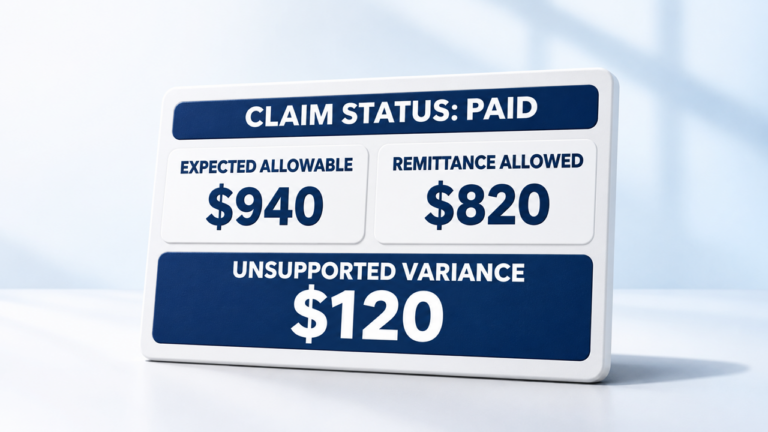
When Payers Deny Claims, Practices Pay the Price. Bring That Cost to the Negotiating Table.
Recurring denials create costs beyond withheld reimbursement, including staff time, physician involvement, delayed cash flow, and repeated follow-up. When documented carefully, payer-related denial burden becomes credible financial evidence for negotiation.
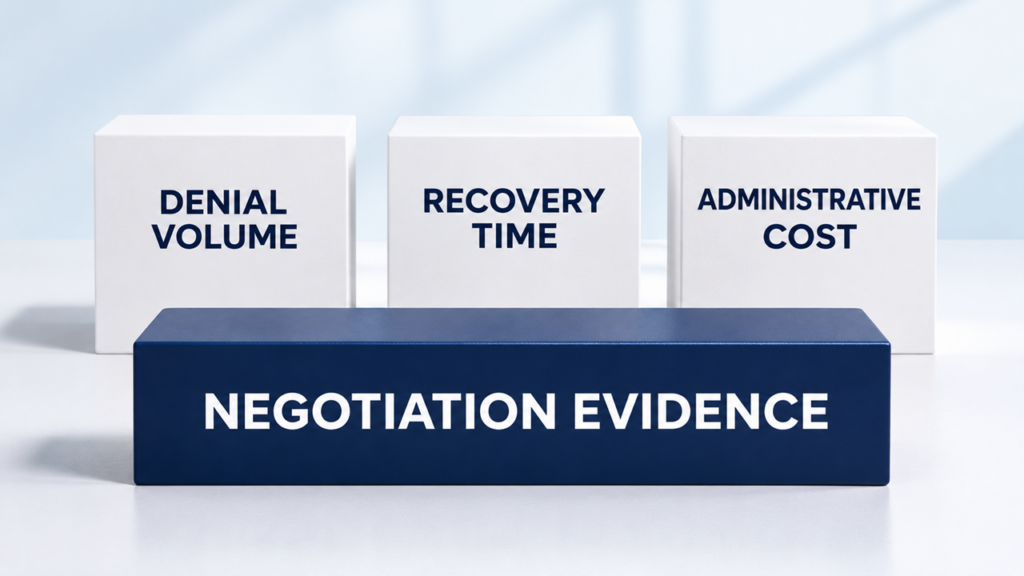
A denied claim does not create only one financial problem. It delays or withholds reimbursement, but it also requires the practice to spend time and money determining what happened, correcting what can be corrected, gathering documentation, submitting an appeal, and following up with the payer.
Even when the appeal succeeds and the contracted payment is eventually received, the practice does not recover the administrative cost of obtaining it. That distinction matters because recurring payer-related denials can reduce the economic value of a contract without changing a single rate in the fee schedule.
When those costs are documented carefully, denial activity becomes more than a billing frustration. It becomes financial evidence that belongs in the payer negotiation.
A Recovered Payment Does Not Erase the Cost
Revenue cycle teams perform essential work when they investigate denials and recover reimbursement. But a successful appeal resolves only the payment outcome. It does not erase the staff time, physician involvement, delayed cash flow, vendor expense, or repeated follow-up required to reach that outcome.
If the same denial occurs repeatedly, the practice may become very efficient at correcting it while continuing to absorb the cost every month. Improving the appeal process helps collections. Correcting the condition producing the denial improves the payer relationship.
Separate Internal Problems From Payer Related Problems
Not every denial creates negotiating leverage. Some result from coding errors, incomplete documentation, missed filing deadlines, eligibility issues, or failure to satisfy a known authorization requirement. Those denials call for internal corrective action.
Other denials may reflect payer processing errors, inconsistent application of contract terms, unclear documentation standards, recurring medical necessity disputes, or payment policies that are applied differently from one claim to another.
A credible negotiating position begins by separating these categories. The practice should not attribute every denial to the payer. It should identify the payer-related patterns it can substantiate and show how those patterns affect payment, staff workload, and physician operations.
Turn Denial Activity Into Financial Evidence
Most practices know which payers create the greatest frustration. Negotiations require more than frustration. They require a defined period of data and a clear explanation of what the data shows.
Useful measurements include:
- Denial frequency by payer, service, reason, and CPT® code
- Dollar amount initially withheld or placed at risk
- Percentage of denials overturned, upheld, or otherwise resolved
- Staff and physician time required to investigate and appeal
- Average days from denial to final payment
- Recurring authorization, documentation, or adjudication problems
- Administrative expense associated with the substantiated payer-related denials
These measurements allow the practice to distinguish isolated errors from a recurring operational or contractual problem. They also make comparisons possible. A payer that requires substantially more rework than comparable payers may be creating a hidden cost that is not visible in the contracted rate alone.
Put a Dollar Value on the Denial Burden
Consider a hypothetical practice that identifies 150 denied claims in one month requiring investigation or follow-up. If each denial requires an average of 25 minutes of staff time, the practice spends approximately 62.5 hours addressing them.
At an illustrative fully loaded staffing cost of $30 per hour, that represents $1,875 in monthly administrative expense, or $22,500 annually if the pattern continues. The calculation does not include physician involvement, outside billing expenses, delayed cash flow, extended appeals, or reimbursement that is never recovered.
These figures are illustrative, not industry benchmarks. A practice should use its own volume, time, staffing cost, and appeal data. It should also attribute only the portion supported by documented payer-related problems. That discipline makes the resulting financial argument more credible.
Bring Specific Requests to the Negotiating Table
Denial data becomes negotiating leverage when it supports a defined request. The practice should connect each recurring problem to a contractual or operational change that could reduce it.
Depending on the evidence, the practice may seek:
- Clearer coverage and documentation requirements for frequently disputed services
- Defined appeal, escalation, and response procedures
- A designated contact for recurring adjudication or payment problems
- Advance notice before material payment or medical policy changes
- Protection against retroactive application of new requirements
- Correction and monitoring of substantiated processing errors
- Reimbursement improvements that recognize the total economic burden of the relationship
These are potential objectives, not guaranteed concessions. Some requirements may also be governed by applicable law, regulation, or plan policy. The purpose is to replace a general complaint with documented findings and a practical proposal.
Recovering Revenue Is Not the Same as Improving the Contract
Billing teams manage claims. Payer contract strategy addresses the rules surrounding those claims. When a team overturns the same type of denial month after month, it protects revenue, but the practice continues paying to correct the same problem.
That is the point at which denial data should move beyond the billing department. The objective should not be only to appeal more efficiently. It should be to determine whether the contract, related policies, or payer processes can be changed so fewer preventable denials occur in the first place.
Where CodeToolz Fits
This is where the complete CodeToolz process becomes valuable. Denial and appeal data identifies the recurring problem. Contract and reimbursement analysis helps determine which services, provisions, and payment amounts are exposed. The Negotiation Package converts those findings into a specific, supportable request.
Once revised language, an attachment, or an operational commitment is accepted, the Payer Contract Center gives the final document, effective date, and future amendments a permanent home. The practice can then measure whether the negotiated change reduces denials, shortens payment delays, and improves the financial performance of the relationship.
Your Next Step
Select one commercial payer that consistently generates substantial denial and appeal activity. Review a representative period and separate internal errors from substantiated payer-related issues. Identify the three recurring problems producing the greatest financial or administrative burden.
For each problem, document the affected CPT® codes, denial reason, appeal outcome, staff or physician time, days to payment, and reimbursement at risk. Then identify the contractual or operational change that could reduce the burden.
That analysis can turn recurring denial activity into a focused and credible negotiating position.
Building Stronger Payer Strategies
At CodeToolz, we believe physician practices should understand the full economic value of every payer relationship. Contracted rates matter, but so do payment accuracy, administrative burden, dispute frequency, and the cost of obtaining reimbursement already earned.
The strongest payer strategies manage the agreement, analyze its real financial performance, and use that evidence to negotiate meaningful improvement. When payers deny claims, practices often pay a price beyond the reimbursement initially withheld. That cost deserves a place at the negotiating table.
Dana R. Bellefountaine Jr. | Founder & CEO | CodeToolz | The Physician’s Advocate in Payer Contracting
#CodeToolz #ClaimDenials #PaymentIntegrity #PayerContracting #PayerNegotiations #ContractAnalysis #PhysicianReimbursement #RevenueCycleManagement #PhysicianPractices #HealthcareStrategy